
A Pulitzer Prize-winning newspaper

It’s pretty amazing how much progress the medical community has made in the past century or so. Some basics haven’t changed much, but new research, medications, treatments, surgeries and discoveries have revolutionized health care in America and around the world. Those discoveries need to be encouraged and allowed to continue.
My wife Kathy underwent reverse right shoulder replacement last Friday. If someone had told that to me before a few weeks ago, I’d have replied, “Huh?” So I’ll try to explain it in nonprofessional terms, as an example of medical fine-tuning.
Kathy’s shoulder has been a problem for her for quite a while. A few years ago it was already causing her pain. So she had rotator cuff surgery to repair it. The rotator cuff is a group of muscles and tendons that hold the arm bone (humerus) within the shoulder socket, stabilizing the shoulder joint.
Her surgery back then was successful, but over time, problems resurfaced. Examination revealed nearly complete disintegration of part of her repaired rotator cuff. Her surgeon explained that for patients more than 80 years old, replacing the shoulder is usually more successful than attempting to re-repair the rotator cuff. Kathy falls into that age category.
So after a series of tests, she was scheduled for last Friday’s surgery. She’s among the older people whose loss of rotator cuff muscles and tendons makes standard shoulder replacement (installation of an artificial shoulder with ball and socket in their normal positions) ineffective.
Surprisingly to me, shoulder replacement dates way back to 1893. But reverse shoulder replacement was a long time coming, not appearing for nearly another century.
In 1974, Oklahoma native Dr. Charles Neer, a graduate of Dartmouth College and Columbia University Medical School, proposed reversing the structure of the artificial shoulder. He suggested reversing the ball and socket: installing an artificial apparatus with the socket on top of the arm bone, and the ball attached to the underside of the shoulder blade, allowing the deltoid muscles of the upper arm to do the work of the shoulder.
Enter French doctor Paul Grammont, who did his medical studies in Lyon and became chair of the orthopedic department of the Medical University at Dijon, France. A skilled handyman, Dr. Grammont performed biomechanical experiments on the knee and shoulder in his own garage before moving to the labs at the Dijon university.
In 1985 Dr. Grammont developed and performed a reverse shoulder replacement, following up on the procedure suggested by Dr. Neer. The reverse procedure allows the deltoid muscles to take over. The shoulder thereby recovers both mobility and stability.
Various adjustments to Dr. Grammont’s surgery method took place, and the U.S. Food and Drug Administration approved the procedure for America in 2003. So it’s now been only about 25 years since American surgeons have been able to perform it here.
Kathy’s prognosis is that in a few months she’ll regain significant movement, flexibility and function in her right shoulder, and will be able to use it comfortably once again.
Her operation is a classic example of the importance of medical research. Improvements over the past century or so have lengthened life spans significantly and made people more comfortable. But there are plenty more discoveries to be made to improve the practice of medicine and health care.
When I began my newspaper career at the Jefferson Bee and Herald in 1967, I handled obituaries. Most of them, as I recall, were for people who died in their 70s. By the time I retired in 2012, most obituaries were for people in their 80s, with several in their 90s or 100s. That trend has continued.
In 1967 the expected life span of Iowans, who paralleled Americans generally, was 71. By 2026 that had increased to 79, after taking a small dip during the Covid pandemic around 2020. It appears to me to be at least 80 now in west central Iowa.
The trend is a direct result of medical research and development, led by the National Institutes of Health, and by American universities that traditionally have received large research grants from the federal government. Private corporations depend on those two institutions for development of their drugs and other products.
Funding for NIH and universities is now under threat from the current administration and Congress, which no longer appear to place health care advances on their priority list. Both financial and cultural reasons seem to drive the government’s decisions in that regard.
Americans’ health future will suffer without critical research to stay ahead of various biological and environmental threats, to say nothing of the natural deterioration that happens to the human body as people live longer.
Grateful thanks to federal officials, elected and otherwise, who have heretofore supported and protected America’s longstanding tradition of medical research. May that tradition survive and prosper.
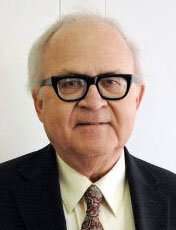
Rick Morain is a reporter and columnist with the Jefferson Herald.


Comments
No comments on this item Please log in to comment by clicking here