
A Pulitzer Prize-winning newspaper
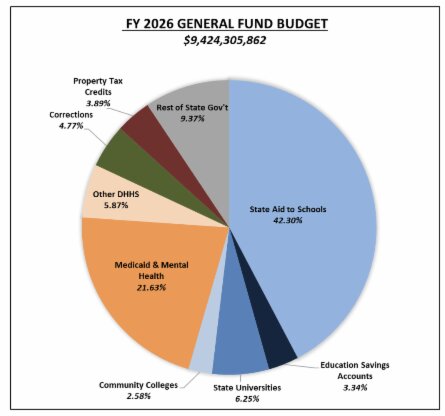
The Fiscal Year 2026 budget will spend $9.424 billion in the next year, an increase of 5.33% over the current year.
With the ending of the enhanced federal matching rate for Medicaid in 2023, it was a matter of time before Iowa had to commit increased state tax dollars to the largest program in state government. For FY 2026, the state will spend $1.903 billion from the General Fund for the state’s share of the Medicaid program. This is an increase of $252.7 million over the current year’s budget. Most of the additional funds are to replace the enhanced matching funds. But the budget also contains several provider rate increases.
Primary among the Medicaid rate increases is the $20 million increase in funding for nursing home reimbursement. Addressing nursing home funding was a red-line issue for many of us, and getting the agreement to raise rates for this critical service across Iowa was a major victory for Iowans. The Health and Human Services budget also contained rate increases for dental services (+$2.1 million), intermittent community-based services (+$3 million), maternal health care (+$420,000), and prosthetics and orthotics (+$100,000).
Rate increases were not limited to Medicaid, as the House really went to bat in getting additional funding for child welfare providers and subsidy rates to foster care families and those participating in the state’s adoption subsidy program were increased five percent. These achievements would have made former HHS budget chair Dave Heaton proud of our commitment to helping those caring for Iowans in need. Dave passed away earlier this year - and his legacy in this budget and building will never be forgotten.
Iowa’s education system also received additional funds. With supplemental state aid set to grow by 2% in the next school year, additional funding was secured for school transportation costs, per pupil equity, and operational sharing agreements between school districts. The second phase of last year’s agreement to raise teacher salaries was fulfilled in the new budget. And after some hard bargaining and over numerous objections, the House maintained the commitment of $14 million of additional funding to school districts to supplement pay to paraeducators and other vital school support staff.
In the Education budget, funding for Iowa’s community college system has been a consistent priority for the House. In FY 2026, community colleges will receive $243.4 million in state support. This is an increase of $7.5 million over last year.
The Board of Regents also received increased funds for special programs at each university. The University of Iowa received $1 million to expand cancer research here in Iowa while also getting funds for the new Center for Intellectual Freedom. Iowa State University’s Ag Experiment Station received a $1 million increase and the University of Northern Iowa was given $1 million for its new Center for Civic Education and $1.5 million to begin offering student from contiguous states the ability to attend UNI while paying in-state tuition.
In the Justice Systems budget, the Legislature reached agreement to provide these critical functions with an additional $9.5 million. Much of the new funds goes to the Department of Corrections to address salary raises and cost increases. The Judicial Branch was given $202.7 million for its operations, which includes a 2.5% raise for judges and other judicial officers. And the Iowa State Patrol received an additional $2.2 million.
The budget boosts efforts at the Department of Agriculture and Land Stewardship to respond to bird flu outbreaks and other foreign animal diseases. The Department of Natural Resources received new funds for state park maintenance and was instructed that any proceeds from sales of park property must be used for improvements in that state park. Additionally, we voted to extended the state’s partnership with Habitat for Humanity to rehabilitate housing across Iowa, a program that was a priority of Martin Graber, who also passed away earlier this session.
Contact Jones by email: megan.jones@legis.iowa.gov



Comments
No comments on this item Please log in to comment by clicking here