
A Pulitzer Prize-winning newspaper

There’s a reason the phrase listing the Three R’s puts Readin’ first and Ritin’ second. To write competently, you first need to see how to do it. What you’re reading right now grows out of a near-addiction to books, stories, poems, plays, and the rest of it that has blessed me for more than 80 years.
Some lucky individuals possess a genius for writing that gestates in what they read but then blossoms into their everlasting classic prose and/or poetry. Abraham Lincoln is an example. The young unschooled Lincoln read everything he could find and borrow within an impressive radius of his rural home, and drew on what it taught him to become the great orator and author that we admire today.
These musings are by way of introduction to the episode this column is about: my acquisition two weeks ago of 40 books for which we have no room in our house.
Kathy is a member of Friends of the Library here. Those volunteers help with the Jefferson Public Library’s annual book sale. After she left the house for her stint at the recent sale, I noticed her travel mug, full of coffee, on the chest in the hall. I wondered if she had intended to take it with her, and indeed 20 minutes later she called to ask if I would bring it to her, which I did.
The shelves around the large basement room, as well as the stand-alone shelving on the floor, were crammed with used books for sale. I gave Kathy her coffee mug and scanned some of the rows and rows of books, arranged carefully by topic.
If the arrangement had been different, I probably wouldn’t have noticed what caught my eye: a shallow three-foot heavy cardboard box on an upper shelf near the door, with top and one side removed, containing a long row of small matching light blue hardback volumes. Curious, I pulled out what proved to be a copy of William Shakespeare’s “King Lear.” A quick check of the covers of the other 39 revealed a complete set of Shakespeare’s plays, plus volumes with his sonnets and other writings.
I’ve always held Shakespeare in awe. Born and raised in the rural English town of Stratford-on-Avon, 100 miles northwest of London, he somehow developed skills that earned him his place at the summit of English language writers. He single-handedly created a sheaf of words and phrases that remain part of everyday English usage yet today.
My Jefferson High School freshman and senior English teacher, Leta Jaquis, introduced me to The Bard. We read “Romeo and Juliet” as a class assignment, something many students across America did back then. Maybe they still do. I hope so.
As I did Shakespeare, I likewise held Mrs. Jaquis in awe. A queenly woman, her white hair perfectly coiffed and her dresses invariably stylish, she commanded well-earned respect as she held forth in front of the class. Her speech was stylish as well. For me it was a pleasure to attend her class, both as a freshman and as a senior.
(A story that maybe best describes Mrs. Jaquis: She once overheard someone remark about “the girls that get pregnant in school.” Leta drew herself up and replied, “Well, it’s not happening in my class.”)
Anyway, Mrs. Jaquis admired Shakespeare, so I admired Shakespeare. As I read more of him, I learned why she did so. He’s remained a favorite of mine in the English language literary canon.
So when I discovered the matched set of the complete Shakespeare on the book sale shelf, I check out the price. Twenty-five cents a book. The whole 40-book set for 10 bucks. If Kathy hadn’t been sitting at the cash box table, it would have been an automatic sale.
But when I excitedly told her it was a steal, and I needed to have it, she didn’t agree: “We don’t have room for it.” And she’s right: every bookcase in our house, and they are many, is full. Stacks of books are piled on available flat surfaces everywhere, and additional boxes of them sit on the floor and the beds in the attic. Then there’s the board-and-tile five-tiered shelving along a basement wall that holds my eight years of college books, mostly history and literature titles.
I gave her my best puppydog pleading look, and to my surprise she relented. “Well, all right. But you’ll have to put the box under the bed on your side.”
That was fine with me. I pulled out a ten-dollar bill, handed it over, and walked out (with help) with the 40-volume boxed set.
It wouldn’t fit under the bed. The box was a little too tall. So as of now it lies in state on the single bed in the spare bedroom on the second floor. It will probably end up in the attic with the others, unless we clear out space for it in one of the bookshelves and donate the cleared books someplace.
But the Shakespeare tale wasn’t done. Since I had only looked at the book titles along their spines, I hadn’t noticed initially what the covers and title pages revealed.
The covers, embossed in gold, say “The Yale Shakespeare.” The books were copyrighted in 1923. The title pages read, “Published under the direction of the Department of English, Yale University, on the fund given to the Yale University Press in 1917 by the members of the Kingsley Trust Association (Scroll and Key Society of Yale College) to commemorate the seventy-fifth anniversary of the founding of the society.”
I was gobsmacked. Six decades ago I had spent four very happy years as an American Studies major at Yale Graduate School, including classes in the Department of English. And now the Jefferson Public Library yielded up a handsome set of Shakespeare’s complete works, published by Yale University Press under the direction of the university’s English department.
All the stars must have aligned somehow. My only remaining question is how the set, in perfect condition, came to be available at the library’s used book sale for $10. Yale is 1,350 miles from Jefferson. It’s a wondrous mystery, and secretly I hope I never find out.
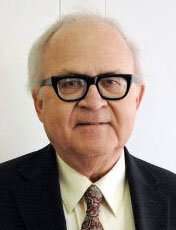
Rick Morain is a reporter and columnist with the Jefferson Herald.


Comments
No comments on this item Please log in to comment by clicking here